Opting Out of Viral Things: A PhD Student's Guide to Not Getting Pulled In
Viral content is a specific time leak for PhD students. This guide treats viral things as a budget problem—spot the pull and decline it before it starts.

Opting Out of Viral Things: A PhD Student's Guide to Not Getting Pulled In
To avoid viral things during a PhD, treat them as a time and attention budget problem: set a default rule to decline unless the content directly serves a current research task and will still matter in a week. Notice the moment before you get pulled in, handle social pressure by being honest and redirecting conversations, and audit your consumption for awareness, not guilt.
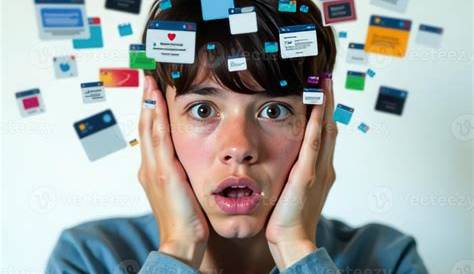
You open a new tab to check a citation and forty minutes later you're three layers deep into a video essay about a topic you don't even care about. The paper you meant to read is still minimised. For a PhD student, viral content is a specific kind of time leak, and it hits exactly when your cognitive resources are most precious. You can learn to spot the pull and decline it before it starts.
What actually counts as a viral thing when you are doing a PhD?
Most advice about viral content assumes you're scrolling social media. For a PhD student, the category is wider. A viral thing is any piece of content, trend, tool, or conversation that spreads quickly through your peer network and demands attention now. It can be a new preprint that everyone in your subfield is tweeting about, a productivity app that promises to reorganise your entire workflow, a debate on academic Twitter about peer review, or a meme about thesis writing that circulates in your department's group chat. The common thread is speed and social pressure: you feel behind if you haven't engaged with it.
Consider the lab Slack channel. Someone shares a link to a blog post arguing that a widely used method is flawed. Within an hour, three people have replied. By the end of the day, it's the main topic at coffee. That blog post is a viral thing in your micro-community. It might be relevant to your work, or it might be a distraction dressed as professional development. The same goes for a new AI tool that claims to summarise papers. Suddenly everyone is testing it, sharing screenshots, and debating its merits. If you don't try it, you're out of the loop.
The category also includes academic drama: the latest scandal, the controversial tweet by a senior figure, the petition about conference fees. These spread because they trigger strong emotions and a sense of shared identity. They take over a group's attention fast. For a PhD student, these can feel like important professional news, but often they are noise with a scholarly veneer.
Viral things can be offline too. A rumour about a faculty hire, a new policy that everyone is gossiping about, a sudden rush to use a particular statistical technique because a famous lab published a paper using it. These spread through conversations and emails, not algorithms. They still pull at your attention and make you feel you should drop what you're doing.
Why does the pull to viral content hit harder during a PhD than in other work?
PhD work has a few features that make it especially vulnerable to viral pulls. The work is open-ended. You are responsible for defining your own tasks, and there is no manager telling you to ignore the new thing and finish the report. The lack of external structure means that any novel input can feel like a legitimate part of your job. Reading a viral blog post about productivity feels like work because it might help you work better. It rarely pays off.
PhD students are also chronically uncertain about whether they are doing enough. The viral thing offers a quick hit of feeling productive without the slow, grinding progress of actual research. Engaging with a trending topic gives you something to talk about at the next group meeting, a way to signal that you are on top of things. That social reward is powerful, especially when your actual experiments are failing.
The isolation of PhD work makes the social pull stronger. You spend long hours alone with your data or your writing. The viral thing is a connection to the wider world, a shared experience with your peers. Opting out can feel like opting out of the community. In a lab where everyone is discussing the latest controversy, not participating marks you as out of touch.
The boundaries between work and personal time are blurry. Viral content often lives on the same platforms you use for work: Twitter for academic news, Slack for lab communication, even email for journal alerts. It's hard to avoid because it's mixed in with legitimate professional information. You can't just delete the app; you need it for your job.
And PhD students are in a training phase. There is a tacit expectation that you should be aware of everything happening in your field. Viral things often present themselves as important developments you must know about. The fear of missing something important is real. But most viral things are forgotten within a week. The cost of missing them is low. The cost of chasing them is high.
How do you notice the moment before you get pulled in?
The moment before you get pulled in is subtle. It's the instant when your attention shifts from what you intended to do to something else, and you feel a small urge to follow it. Catching that moment takes practice. Start by noticing the physical cues. You might reach for your phone without thinking, or your eyes might flick to a notification. You might feel a slight tension in your chest, a sense of urgency. These are signals that a viral thing is trying to hook you.
Another cue is the language in your head. You might think, "I'll just check this one thing," or "This looks important." Those thoughts are often rationalisations. The viral thing rarely announces itself as a waste of time; it presents as relevant or urgent. When you hear yourself justifying why you need to engage, pause.
Context matters too. Notice when you are most vulnerable: after a difficult meeting, when you're stuck on a problem, when you're tired. Those are the times when the pull is strongest because you crave a break or a sense of accomplishment. If you can identify your high-risk moments, you can prepare for them.
You can also use environmental cues. If you work with your phone in another room, you create a physical barrier. If you use website blockers during deep work sessions, you make the pull harder to follow. None of this is about willpower. It is about making the moment of choice conscious, so there is a gap between the impulse and the action.
Pay attention to the feeling of relief or excitement when you see a viral thing. That emotional spike is a signal. It might be positive, but it's also a sign that the content is designed to grab you. Catching that spike gives you a chance to decide whether to engage or not.
What decision rule tells you whether to engage with a viral thing at all?
A simple rule is to ask three questions before engaging. Does this directly help me finish a specific task on my current research? If the answer is no, it's probably a distraction. Will I still care about this in a week? Most viral things fade quickly. If it's unlikely to matter in seven days, skip it. What is the opportunity cost? What will I not do if I spend the next thirty minutes on this? Usually, the alternative is something that moves your thesis forward.
Another useful rule is the two-source test. If you encounter the same idea from two independent, reputable sources that you trust, not just repeated by the same crowd, then it might be worth attention. But if it's only circulating because it's controversial or entertaining, let it pass.
You can also set a threshold based on your goals. For example, if you are in the final six months of your PhD, your default should be to decline anything that doesn't directly contribute to your thesis or job applications. If you are earlier, you might allow a small budget for exploration, but still bounded.
Have a default. Without one, you will decide in the moment, when the pull is strongest and your judgment is weakest. A default rule like "I don't engage with viral things unless they pass the three-question test" makes the decision easier and less emotional.
Remember that engaging includes reading, discussing, sharing, and reacting. Each of those consumes time and mental energy. The decision rule should cover all forms of engagement. If you decide to read, set a timer. If you decide to discuss, limit it to a brief conversation.
How do you handle the social cost of not participating?
Opting out can make you feel like an outsider. When your labmates are all talking about the latest viral controversy, staying silent can be awkward. But there are ways to manage the social cost without giving in. Be honest but lighthearted. You can say, "I'm trying to cut down on that stuff," or "I'm on a news diet this week." Most people will respect that. If they push, you can deflect with humour.
Find alternative ways to connect. The social bond doesn't have to be built on viral content. You can ask about their work, suggest a coffee break, or talk about something else. Often, the viral thing is just a conversation starter; you can start a different conversation.
And not everyone is as into it as it seems. In any group, there are probably others who also feel overwhelmed by the constant stream of viral content. By opting out openly, you might give them permission to do the same. You could even become the person who suggests a break from the noise.
Accept that you will miss some inside jokes or references. That's a small price to pay for protecting your focus. You can always ask for a summary later if it turns out to be genuinely important. Most of the time, it won't be.
You are not being antisocial; you are being purposeful. Your colleagues may respect you for it, even if they don't say so. And the relationships that matter will survive a few missed memes.
What do you do when a viral thing is genuinely relevant to your field?
Sometimes a viral thing is directly relevant to your research. A new paper might challenge your methods, or a policy change might affect your funding. In those cases, you need to engage, but you can do it deliberately. Set a time limit. Give yourself thirty minutes to read the core material, not the commentary. Go to the primary source. Skip the tweets and the blog posts and read the actual paper or policy document. Extract what you need and move on. Take notes on how it affects your work, then close the tab.
You can also schedule engagement. Instead of reacting immediately, add it to a list of things to check during a designated time, perhaps once a week. This prevents the viral thing from interrupting your deep work. When you do engage, do it with a clear purpose: what question are you trying to answer?
If the viral thing is a new tool or method, test it in a controlled way. Don't overhaul your workflow because of hype. Try it on a small task and see if it actually saves time. Often, the initial excitement fades once you encounter the learning curve.
Separate the signal from the noise. The viral thing might contain a kernel of important information buried in hype. Your job is to extract the kernel without getting sucked into the surrounding drama. This is a skill that improves with practice.
How do you audit your recent viral consumption without making it another guilt task?
Auditing your consumption can easily become another way to beat yourself up. The goal is not to judge but to notice patterns. Set aside ten minutes at the end of the week. Look at your browser history or screen time report. Ask: what did I engage with that was viral? How did it make me feel? Did it help my work? Don't aim for perfection; aim for awareness.
Use a simple log. Write down three viral things you engaged with and note the trigger, the time spent, and the outcome. You might find that most of it was low value. That's useful information. You can then adjust your environment or your rules.
Avoid turning the audit into a moral failing. You will slip up. That's normal. The point is to learn what pulls you in so you can catch it next time. Celebrate the times you successfully opted out. Focus on the process, not the score.
Use the audit to refine your decision rule. Maybe you discover that a particular platform is a major source of viral content for you. You can then decide to limit your time there or remove it from your phone. The audit is a tool for designing your environment, not for self-flagellation.
Frequently Asked Questions
Isn't avoiding viral content just another form of procrastination?
No, because the goal is to redirect attention to your research, not to avoid work. Opting out is about making a conscious choice to spend your limited attention on what matters most for your PhD.
What if my advisor expects me to be up to date on viral developments in the field?
You can stay informed without chasing every viral thing. Focus on primary sources and reputable journals, and set aside a specific time each week to scan for important updates. If your advisor asks about something specific, you can address it then.
How can I say no to labmates who want to discuss a viral thing without seeming rude?
Be honest and brief. Say something like, "I'm trying to stay focused on my writing today," or "I'm taking a break from that stuff." Most people will understand. You can also redirect the conversation to work or suggest a different activity.
What if the viral thing is a new tool that could save me time?
Test it on a small, low-stakes task first. Set a strict time limit and evaluate whether it actually improves your workflow. Don't adopt it just because others are excited; wait for the hype to settle and see if it persists.
I feel anxious when I'm not following the latest academic Twitter drama. How do I cope?
That anxiety is a habit, not a signal of real importance. Try a temporary break from the platform and see how you feel. Often, the anxiety fades once you realise you're not missing anything important.
How do I handle FOMO when everyone in my cohort is talking about a viral meme or video?
Remind yourself that the social bond doesn't depend on shared memes. You can connect over other things. If you're curious, ask for a quick summary later, but don't feel obliged to participate in real time.
Is it okay to engage with viral content as a way to relax?
Yes, if it's a deliberate choice and you've budgeted the time. The problem is when it's automatic and displaces work or rest. Set a timer and enjoy it without guilt, then return to your priorities.
What's the first step to reduce viral consumption?
Start by noticing when you feel the pull. Keep a simple log for a few days, recording what triggered you and how you responded. That awareness is the foundation for change.
The notes on productivity app cover the next question, so this page does not repeat them.
The notes on academic Twitter cover the next question, so this page does not repeat them.
The notes on peer review cover the next question, so this page does not repeat them.
The notes on new preprint cover the next question, so this page does not repeat them.