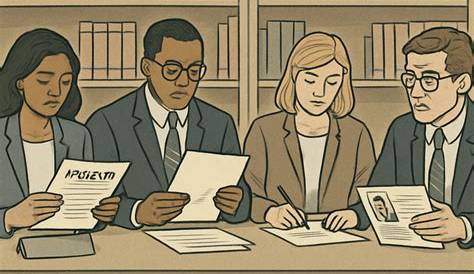
What Happens After You Hit Submit: A Realistic Timeline of Peer Review and Publication
From admin checks to editor screening and reviewer invites, here's the actual sequence after you click submit—and when to worry, nudge, or move on.



What Happens After You Hit Submit: A Realistic Timeline of Peer Review and Publication
After you submit, your manuscript goes through administrative checks, editor screening, and peer review. The time to first decision varies widely by field and journal, but you can expect weeks to months, and desk rejection is a common early outcome.
You've clicked submit. The manuscript is out of your hands, and now you're staring at a confirmation email that says nothing about what happens next. The wait is long, and it is mostly quiet. There is a sequence, though: admin check, editor screening, reviewer selection, review, decision, revision, acceptance, proofs. Each stage runs on its own clock and each one can stall for its own reasons. Knowing the steps tells you when to worry, when to nudge, and when to move on.
What is the actual sequence of events after you click submit?
The moment you hit submit, your manuscript enters a queue. Most journals use a submission system like Editorial Manager or ScholarOne. The first thing that happens is an administrative check, usually within a few days. A managing editor or editorial assistant confirms that your files are complete, that your formatting matches the journal's guidelines, and that you haven't forgotten a required form. If something is missing, you'll get a technical check query. Fix it quickly; the clock doesn't start until the manuscript passes this gate.
Once the admin check clears, the manuscript goes to an editor. For many journals, that's a handling editor, an associate or section editor with expertise in your area. The editor's first job is to decide whether the paper is worth sending out for review. This is the screening stage. It can take anywhere from a day to a couple of weeks, depending on the journal's workload and how quickly the editor gets to it. Some journals aim for a 48-hour screening; others take longer. If the editor decides to send it out, they'll identify potential reviewers. That search can be quick if you suggested good names, or slow if the editor has to dig through the literature and personal networks.
Reviewers are invited, usually by email. They accept or decline. A common pattern is that for every three invitations, one reviewer agrees. So if the editor wants two reviewers, they may need to invite six people. That can add a week or more. Once reviewers accept, they get a deadline, often two to four weeks. Many will finish on time; some won't. The system sends reminders. If a reviewer goes silent, the editor may invite a replacement, which adds more time.
When the reviews come in, the editor reads them and makes a decision. The decision letter is drafted, sometimes with input from the editorial board, and sent to you. The whole sequence from submission to first decision can take anywhere from a few weeks to several months. There's no universal timeline, but you can get a sense from the journal's published turnaround times or from the submission system's status labels.
How long does peer review take, and why does it vary by field and journal?
Peer review timelines vary enormously. In some fields, like economics or finance, the norm can be six months or more to a first decision. In others, like some areas of computer science, conferences have fixed review cycles of a few months. In the life sciences, three to four months is common for a first decision at a good journal. But these are broad generalisations; actual times depend on the journal's workflow and the responsiveness of reviewers.
Several factors drive the variation. First, the editor's workload. A handling editor may be juggling dozens of manuscripts. Second, the availability of reviewers. In narrow specialties, the pool of qualified reviewers is small, and those people are often overburdened. Third, the review model. Journals that use open review or publish reviews may attract fewer reviewers or take longer to find willing ones. Fourth, the journal's internal processes. Some journals have editorial meetings only once a month, which can add weeks.
You can often find median times to first decision on the journal's website or in its annual report. Some journals publish these statistics. If not, you can look at the submission system's status timeline for your manuscript, which may show when it was sent to reviewers. But be cautious about reading too much into small delays. A week or two of silence is normal.
In my experience, the single biggest source of delay is reviewers who agree to review and then disappear. Journals could reduce this by using reviewer reliability scores or by paying reviewers, but most don't.
What is a desk rejection, and how often does it happen?
A desk rejection is a decision by the editor to reject the manuscript without sending it out for external review. It's also called a desk reject or an editorial rejection. The editor may decide the paper is out of scope, lacks novelty, has serious methodological flaws, or doesn't meet the journal's standards. Desk rejections are common. At selective journals, the majority of submissions may be desk rejected. For example, some high-impact journals desk reject more than half of submissions, and some report desk rejection rates above 70%. The exact rate varies by journal and field, but it's a normal part of the process.
A desk rejection says something about fit and timing, not about your worth as a researcher. It often reflects the journal's priorities or the editor's quick assessment. The decision usually comes quickly, often within a week or two. That's the upside: you don't waste months waiting. The downside is that you may not get detailed feedback. Some editors provide a brief reason; others don't. If you get a desk rejection, you should move on quickly. Don't appeal unless you have a strong reason to believe the editor made a factual error or misunderstood your paper. Use the time to improve the manuscript and submit elsewhere.
What do the different editor decisions actually mean?
The decision letter can contain several types of decisions. The most common are:
- Accept: Rare on first submission. Usually follows minor revisions.
- Minor revision: The editor and reviewers think the paper is almost there. You'll need to make small changes, often within a few weeks. The revision may be sent back to reviewers or may be evaluated by the editor alone.
- Major revision: The paper has potential but needs substantial work. You'll be asked to address significant concerns, which may require new experiments, analyses, or rewriting. The revision usually goes back to the reviewers for another round.
- Reject and resubmit: The editor thinks the paper could be suitable but needs a major overhaul. You're invited to submit it as a new manuscript, which means it will get a new submission number and may be reviewed by different reviewers. The difference from major revision is that the revision is not guaranteed to go back to the same reviewers, and the paper is treated as new.
- Reject: The paper is not suitable for the journal. You can appeal if you have strong grounds, but usually you should submit elsewhere.
Each decision comes with a letter from the editor that summarises the reviewers' comments and explains the decision. Read it carefully. The editor's synthesis usually carries more weight than any single reviewer's comment.
How do single-anonymized, double-anonymized, and open review change the process?
Review models affect who knows what and how the review is conducted. In single-anonymized review (also called single-blind), reviewers know the authors' identities, but authors don't know the reviewers'. This is the traditional model in many fields. It can help reviewers assess the work in context, but it may introduce bias.
In double-anonymized review (double-blind), both authors and reviewers are anonymous to each other. This aims to reduce bias based on author identity, institution, or reputation. It requires authors to anonymize their manuscript, which can be tricky. Double-anonymized review is common in some social sciences and humanities fields.
Open review has several variants. In some journals, reviewers' names are published with the article. In others, the reviews themselves are published alongside the paper. In some, the identities are known to the authors but not to the public. Open review can increase accountability and transparency, but it may also make reviewers more cautious or less willing to criticize. It can also slow down the process if reviewers are reluctant to sign their names.
The review model can influence timelines. Double-anonymized review may take slightly longer because authors need to anonymize and editors need to screen for identifying information. Open review may take longer if reviewers are hesitant. But the differences are usually modest.
How do you write a response to reviewers that gets your revision accepted?
The response to reviewers is your chance to show the editor and reviewers that you've taken their comments seriously and improved the paper. A careful response can move a major revision toward acceptance. A sloppy or defensive one can earn you another round, or a rejection.
Here's a structure that works:
- Start with a polite cover letter to the editor. Thank them for the opportunity to revise and summarise the main changes. Keep it brief.
- Use a point-by-point format. Copy each reviewer comment (in italics or quotes) and follow it with your response. Number the comments for easy reference.
- Respond to every point. Even if you disagree, address it. If you think a comment is based on a misunderstanding, explain why politely and provide evidence. If you can't do what the reviewer asked, explain why and offer an alternative.
- Describe what you changed and where. Give page numbers or section references. If you added new data or analyses, include them in the response or in the revised manuscript.
- Be concise but thorough. Don't write a essay for each point; get to the point. But don't skip details that matter.
- Stay professional. Avoid sarcasm or defensiveness. Reviewers are often volunteers; they deserve respect even when their comments are harsh.
A common mistake is to ignore comments you disagree with. That frustrates reviewers and editors. Another mistake is to make changes without documenting them. The response letter should make it easy for the editor to see that you've addressed everything.
If you have new experiments, present the results clearly. If the results contradict the reviewer's expectation, say so and discuss the implications. Editors appreciate honesty.
What happens between acceptance and final publication?
After the acceptance letter, your manuscript goes through production. You'll receive proofs, a PDF or HTML version of the typeset article, and you'll be asked to check it for errors. This is your last chance to catch typos, formatting issues, and factual errors. Proofs usually come with a tight deadline, often 48 to 72 hours. Check carefully but don't rewrite the paper at this stage.
You'll also be asked to sign a copyright transfer or publishing agreement. Read the terms. Some journals allow you to retain copyright; others require transfer. You may also need to pay an open access fee if you've chosen that option.
Online-first publication (also called ahead-of-print or online publication) often happens before the issue is assigned. Your article gets a DOI and is citable. The final version may appear in a print or online issue weeks or months later. The timing varies. Some journals publish online within days of acceptance; others take weeks. The issue assignment can take months, especially for journals with large backlogs.
During production, you may be asked to provide high-resolution figures or raw data. Make sure your files are in order. Delays in production often come from authors who are slow to return proofs or missing files.
When should you appeal a rejection, and when should you move on?
Appeals rarely succeed. Most journals have a formal appeal process, but the bar is high. You should consider appealing only if you have strong evidence that the decision was based on a factual error, a misunderstanding of your work, or a clear bias. For example, if a reviewer claimed you didn't do something that you clearly did, and the editor's decision relied on that claim, an appeal might be warranted. But even then, the editor may not change their mind.
Before appealing, read the decision letter carefully. Does it invite an appeal? Some do, some don't. If you do appeal, write a concise letter to the editor explaining the specific error and why it matters. Don't rehash the entire review; focus on the key issue. Be polite and professional.
In most cases, you should move on. Rejection is normal. The best use of your time is to revise the manuscript based on the reviewers' comments (if any) and submit it to another journal. The exception is if the rejection seems clearly unfair and you have a strong case; then it's worth a short, well-reasoned appeal, but keep your expectations low.
Frequently Asked Questions
How long should I wait before querying the journal about my submission status?
Wait at least the journal's stated average time to first decision, plus a couple of weeks. If the status hasn't changed in that time, a polite query to the editorial office is fine. Don't query more than once every few weeks.
Can I submit to another journal while my paper is under review?
No. Simultaneous submission is considered unethical in most fields and can lead to rejection from both journals. Wait for a decision or withdraw your submission before submitting elsewhere.
What if reviewers ask for revisions I disagree with?
You don't have to comply with every request, but you must respond to each point. Explain your reasoning politely and provide evidence. If you can't do what they ask, offer an alternative. The editor will decide whether your response is adequate.
The notes on submission system's status labels cover the next question, so this page does not repeat them.
The notes on methodological flaws cover the next question, so this page does not repeat them.
The notes on Literature Review PhD Dissertation cover the next question, so this page does not repeat them.
The notes on PhD Admission Requirements: Committees cover the next question, so this page does not repeat them.